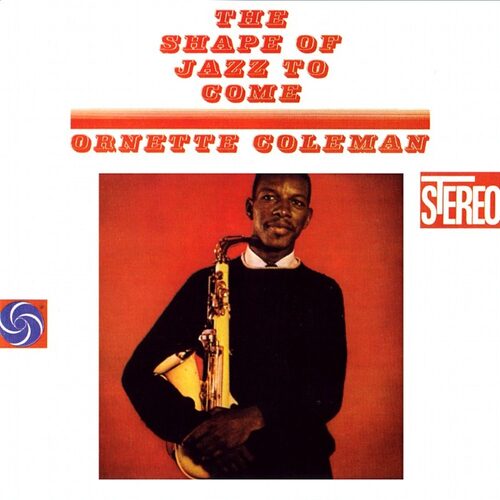
The Shape of Jazz to Come
- Scores: Noise 2, Unease 2, Complexity 3 (each 1 to 5)
- Genre: Jazz, Free jazz
- Mood: yearning, restless, bittersweet
- Sound: free jazz, no piano, plastic saxophone, collective improvisation, melodic themes
The Shape of Jazz to Come helped establish free jazz by dropping the chord structures that bebop was built on. Coleman recorded it in one day in May 1959 in Hollywood with a quartet that had no piano or guitar: Don Cherry on cornet, Charlie Haden on bass and Billy Higgins on drums. Each piece opens with a short theme, moves into several minutes of free improvisation and returns to the theme, a bebop-style head-solo-head form without the harmony. Coleman played a plastic Grafton saxophone with a harsh, cry-like tone and worked with microtonal intervals, and he called his approach harmolodics, which gives melody priority over harmony. “Lonely Woman” is one of the few Coleman pieces to become a jazz standard.
Track list
- Lonely Woman (4:59)
- Eventually (4:20)
- Peace (9:04)
- Focus on Sanity (6:50)
- Congeniality (6:41)
- Chronology (6:05)